How Kiwi Kids News Supports Phase 3 English (Years 7–8): Teaching Digital Texts With Confidence
Published by kiwikids on
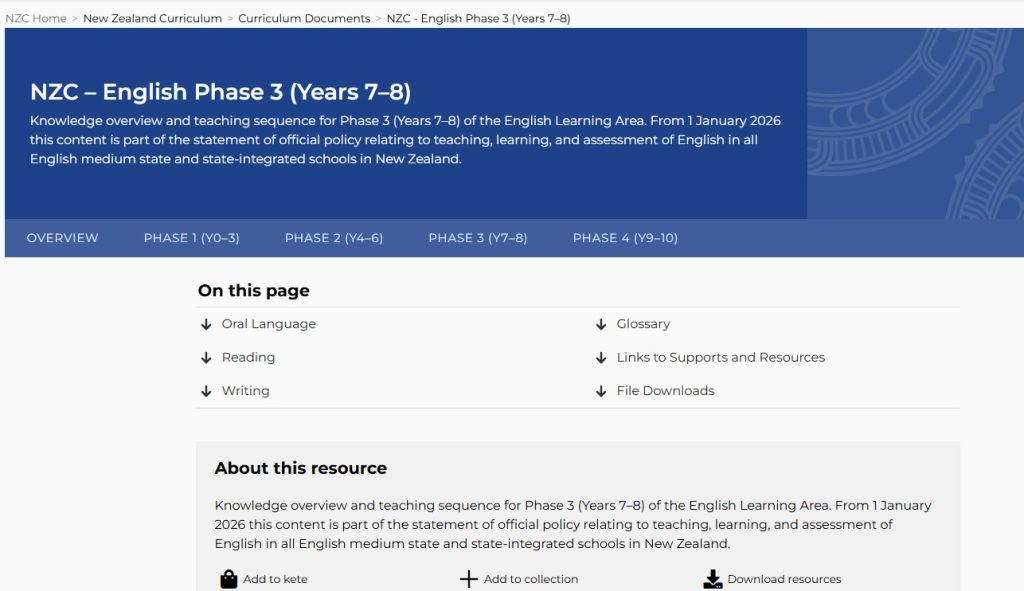
If you’re teaching Years 7–8, you’ll know that reading and writing are no longer “just” about books and worksheets. The Phase 3 English curriculum expects students to work confidently with digital and multimodal texts — and to do more than simply read them.
Students are expected to navigate digital texts, analyse how they work, evaluate reliability and bias, and produce their own writing for real audiences using digital tools. That shift can feel exciting… and also a little daunting when you’re trying to balance time, engagement, and safe online practice.
This is where Kiwi Kids News fits neatly into Phase 3. Digital texts aren’t an add-on in Phase 3 — they’re part of everyday English
Phase 3 positions digital texts as legitimate, everyday texts for study. Students are expected to read and respond to text forms that include digital media and multimodal features, not just traditional print.
Kiwi Kids News provides a consistent, classroom-friendly stream of current events and feature writing that works as a practical “digital text environment” for teaching reading, writing, and critical literacy.
1) Reading digital texts: navigating, interpreting, and analysing how they work
In Phase 3, students are expected to understand that digital texts have features that shape meaning — things like headings, layout, hyperlinks, menus, images, captions, and embedded media.
On Kiwi Kids News, students can practise exactly that kind of reading:
– Skimming headlines and subheadings to predict content
– Interpreting how images and captions influence understanding
– Identifying key information and supporting detail
– Discussing why certain details are included or excluded
– Exploring how structure and layout affect engagement
2) Critical literacy: credibility, perspective, and bias
Phase 3 expects students to go beyond comprehension and begin interrogating texts:
– Who created the text, and why?
– Who is the audience?
– What evidence supports the claims?
– What viewpoints are shown (or missing)?
– How does language influence the reader?
News texts are ideal for this, because they naturally invite discussion about perspective and purpose. Kiwi Kids News articles can be used for fast, high-impact classroom routines such as:
– “Trust Check”: What evidence is used? Is it credible? What would we verify?
– “Perspective Spotting”: Whose voice is centred? Who might disagree?
– “Language Watch”: What words shape your feelings about the topic?
– “Compare & Contrast”: How does this same issue look on different platforms?
These routines build students’ ability to evaluate digital media — a core Phase 3 expectation.
3) Writing for real audiences: informative and persuasive digital writing
Phase 3 expects students to create writing that informs and persuades, and to do so using digital tools with fluency (including keyboarding).
Kiwi Kids News supports this through familiar, high-interest models of writing. Students can study and imitate:
– News reports (structure, clarity, factual tone)
– Feature articles (voice, detail, viewpoint, structure)
– Explanations (sequencing, cause and effect, technical vocabulary)
– Opinion writing (claims, evidence, audience awareness)
Because the platform is current and engaging, students are often more motivated to write when the topic feels relevant.
4) Vocabulary development in authentic contexts
Phase 3 expects students to grow vocabulary and draw on both print and digital supports.
– News and feature articles are rich sources of:
– Academic and topic vocabulary
– Subject-specific language (science, economics, environment, sport, civics)
– Opportunities to unpack meaning using context, morphology, and reference tools
– You can quickly build vocabulary routines around any Kiwi Kids News article, such as:
– “5 words you’d need to teach a younger reader”
– “Vocabulary in context: define it without a dictionary first”
– “Find synonyms that soften or strengthen meaning”
5) Responsible digital practice: copyright, sources, and sharing
Phase 3 also expects students to understand how to participate responsibly in digital environments — including proper attribution and ethical use of content.
Kiwi Kids News can act as a safe, teacher-guided context for teaching:
– Using sources and checking information
– Referencing where ideas and information come from
– Discussing what is appropriate to share, and how
These skills matter not only for English, but across all learning areas. When students are reading about people, places, issues, and events that feel close to home, engagement improves — and so does the quality of discussion and writing. It also creates natural opportunities for culturally responsive conversations about identity, representation, and perspectives, including Māori and multicultural viewpoints.
A practical tool for busy classrooms
The reality of teaching is time. Phase 3 is ambitious — and it should be — but it’s also helpful when you can use one resource to meet multiple expectations.
Kiwi Kids News offers an efficient, familiar structure:
– Regular digital reading
– Consistent opportunities for discussion
– Built-in pathways to writing
– Great texts for critical literacy and media analysis
Want to see Kiwi Kids News in action for Phase 3?
Explore the latest articles and teaching resources at www.kiwikidsnews.co.nz.